
Search Minnesota Divorce Records
Minnesota divorce records are public court documents on file at each of the state's 87 District Courts. You can search for dissolution case files online or go to the county courthouse where the case was filed. The Minnesota Court Records Online system gives free access to basic case details from any county, including party names, case status, and hearing dates. For a certified copy of a judgment and decree, the Court Administrator at the local courthouse handles those requests. This page covers where to find divorce records across Minnesota, how to search for them, what they include, and how to get copies for your needs.
Minnesota Divorce Records Overview
Where to Find Minnesota Divorce Records
The District Court is where divorce records live in Minnesota. Each of the 87 counties has its own court that falls under one of 10 judicial districts. The court keeps the full case file for every dissolution filed in the county. That file holds the petition, the response, financial disclosures, and the final judgment and decree. The Court Administrator in each county manages these records and can make copies for you.
The Minnesota Court Records Online portal is the main way to look up divorce records from home. It is free. You can search by name, case number, or case type across all 87 counties. Documents filed on or after July 1, 2015 are generally available. Older cases show basic info like party names and case status but may not have full documents online.
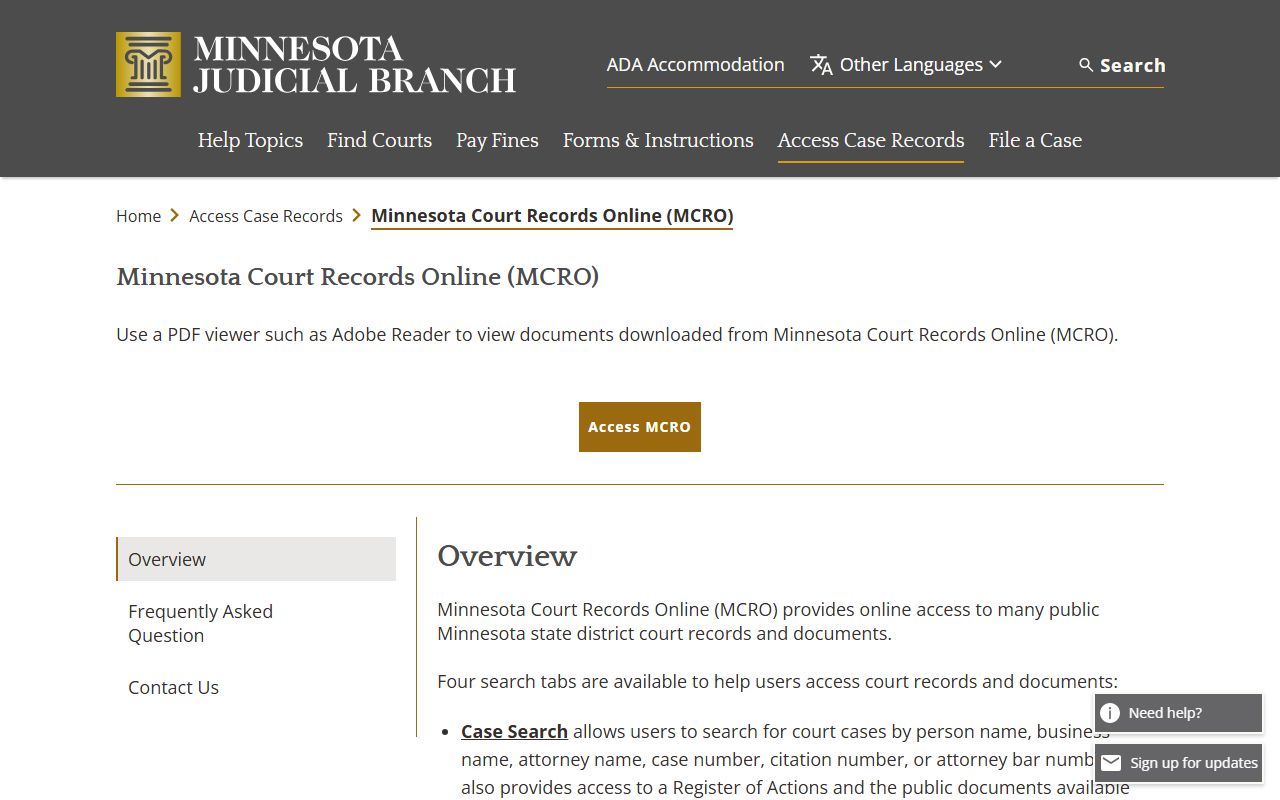
Not sure which court to contact? The Find Your Court tool on the Minnesota Judicial Branch site lets you search by county name to get the court's address, phone number, and administrator info. This is the quickest way to find the right courthouse for your divorce records request.
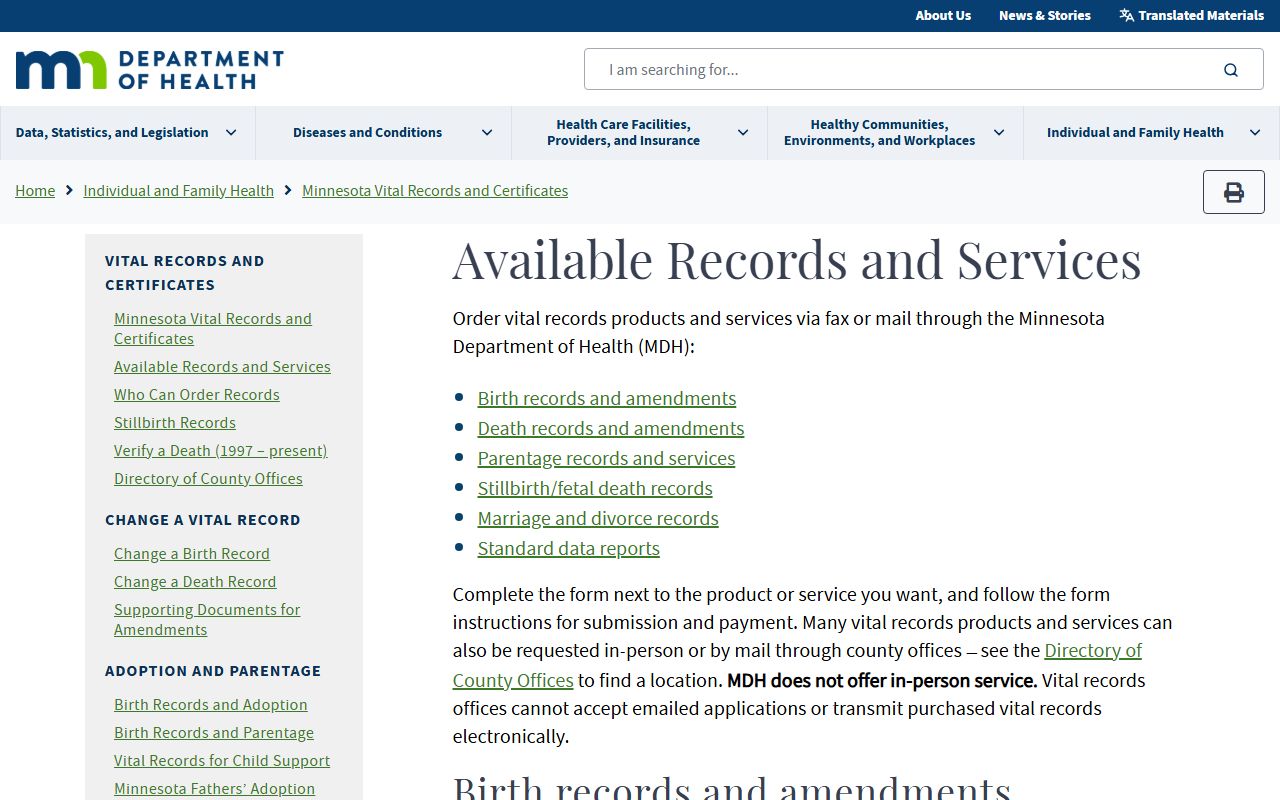
Minnesota also has a state-level vital records office. The Minnesota Department of Health keeps a central index of divorces going back to 1970. They can verify that a divorce happened and give you the county and date. But they do not issue full court documents. For the actual decree or judgment, you have to go to the District Court in the county where the case was filed.
Searching Minnesota Court Records
The state gives you a few ways to search for divorce records. Online access works best for basic case details. Going to the courthouse in person is better when you need certified copies or the full case file. Both methods cover divorce records going back many years.
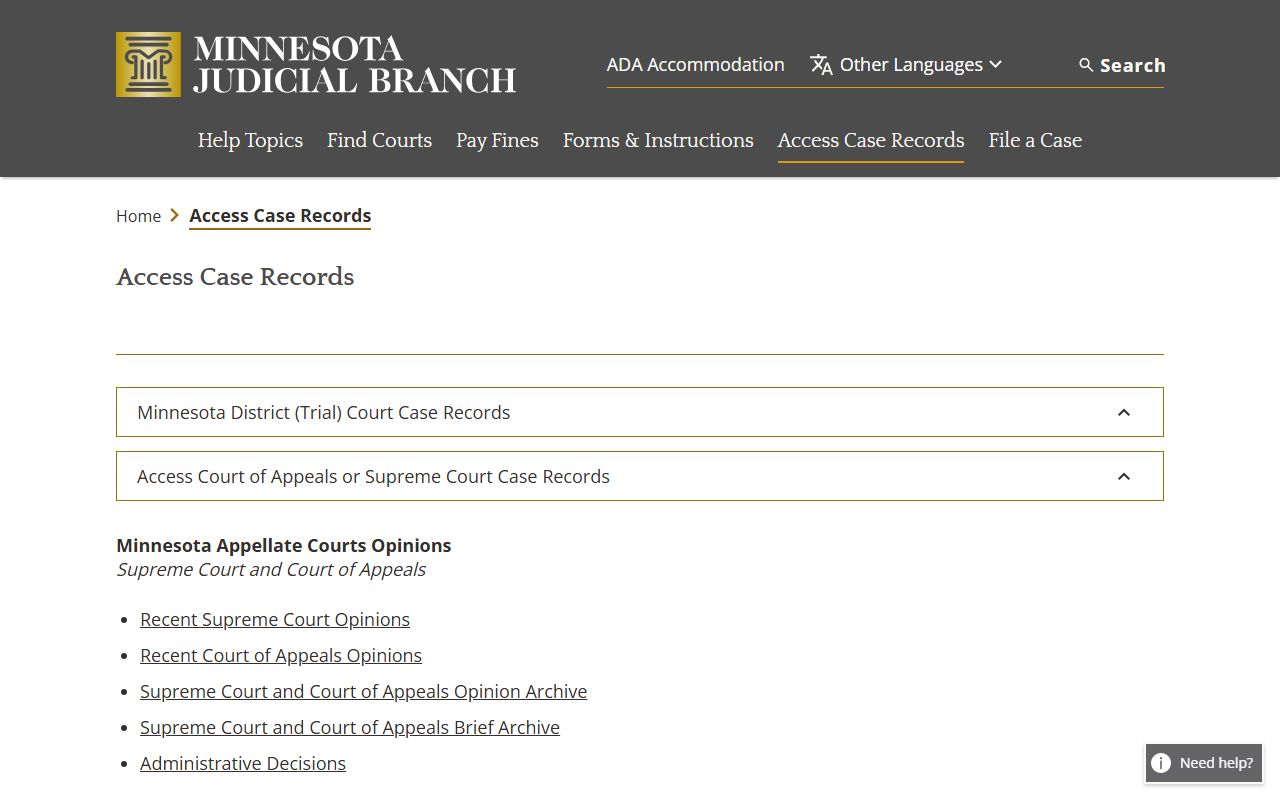
The Access Case Records page on the Minnesota Judicial Branch website is the starting point for all online searches. From there you can reach the MCRO search tool. You pick a county or search statewide. The system shows party names, docket entries, case status, and hearing dates. Some family court records have limits on what shows up online. Still, you can get a solid sense of any case from what is there.
To search for a divorce case, you need the full name of at least one spouse. Having the county or approximate year helps narrow the results. If you have the case number, that is the fastest way to pull up the exact file. MCRO does not charge for searches. Anyone can use it.
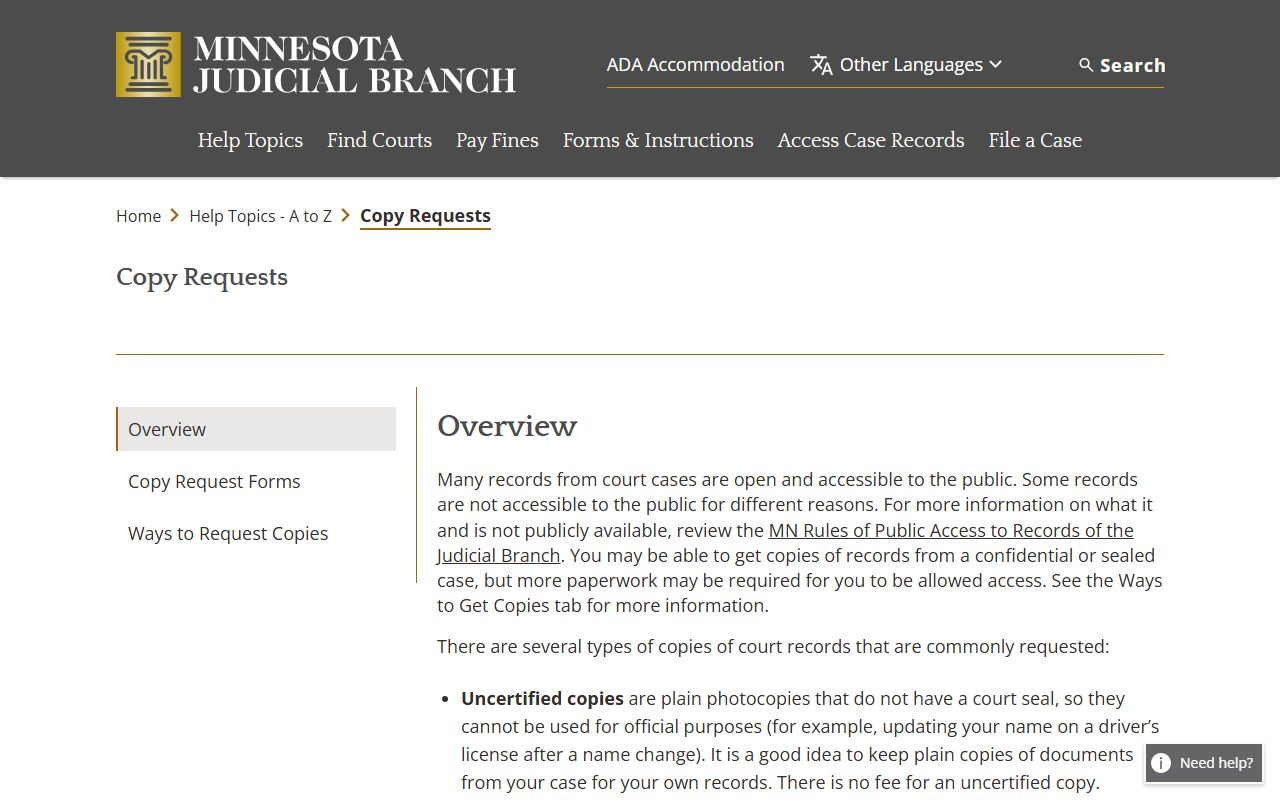
When you need more than what is online, the copy request page explains how to order records from any county. You can request copies in person, by mail, or through the court's electronic filing system in some counties. Each courthouse has its own process, but the state page walks you through the basics.
What Minnesota Divorce Records Show
Minnesota calls divorce "dissolution of marriage." The key document is the Judgment and Decree. This is the final court order that ends the marriage. It lays out property division, custody arrangements, child support, and spousal maintenance. Once a judge signs it, the marriage is over. There is no extra waiting period after the judgment in Minnesota.
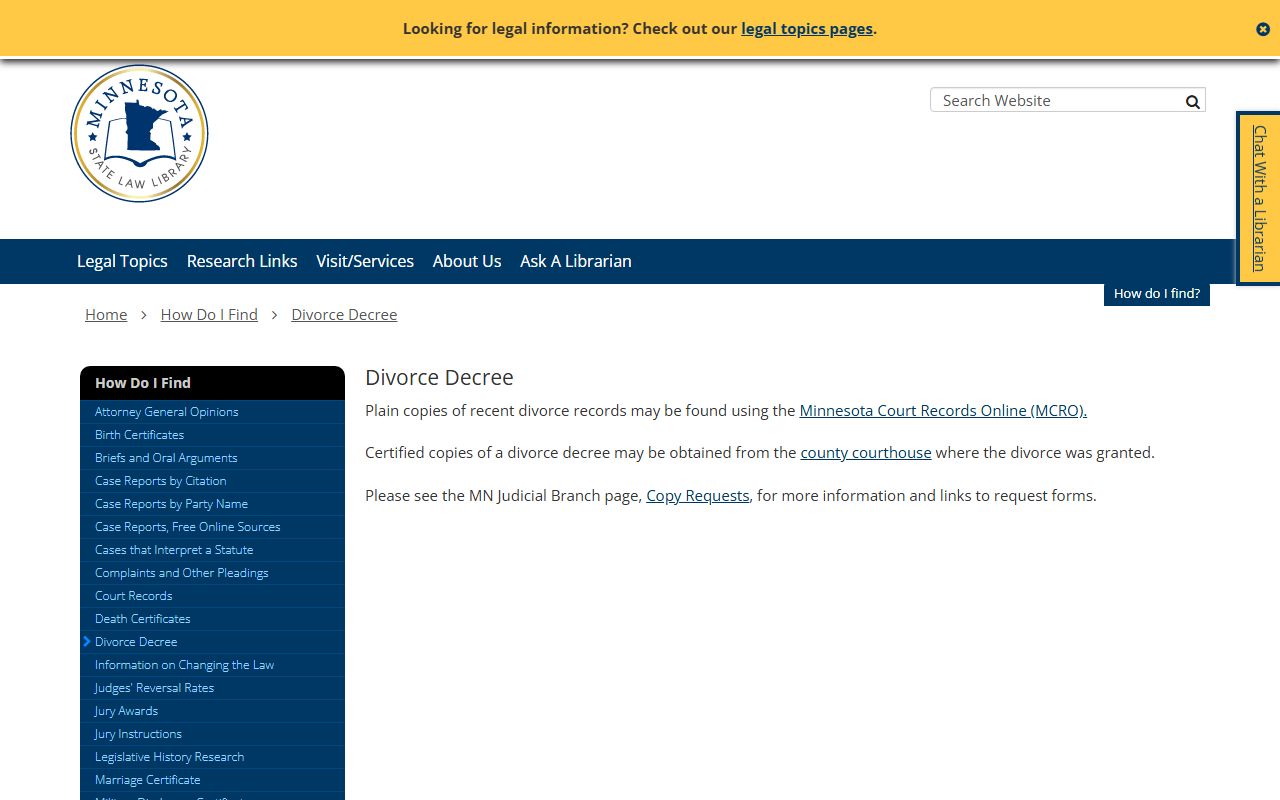
A divorce case file usually includes the petition for dissolution, summons and proof of service, the response from the other spouse, financial disclosures from both parties, any temporary orders, and the marital termination agreement or trial findings. The Minnesota State Law Library has a guide on finding divorce decrees that explains what each document means and where to get it.
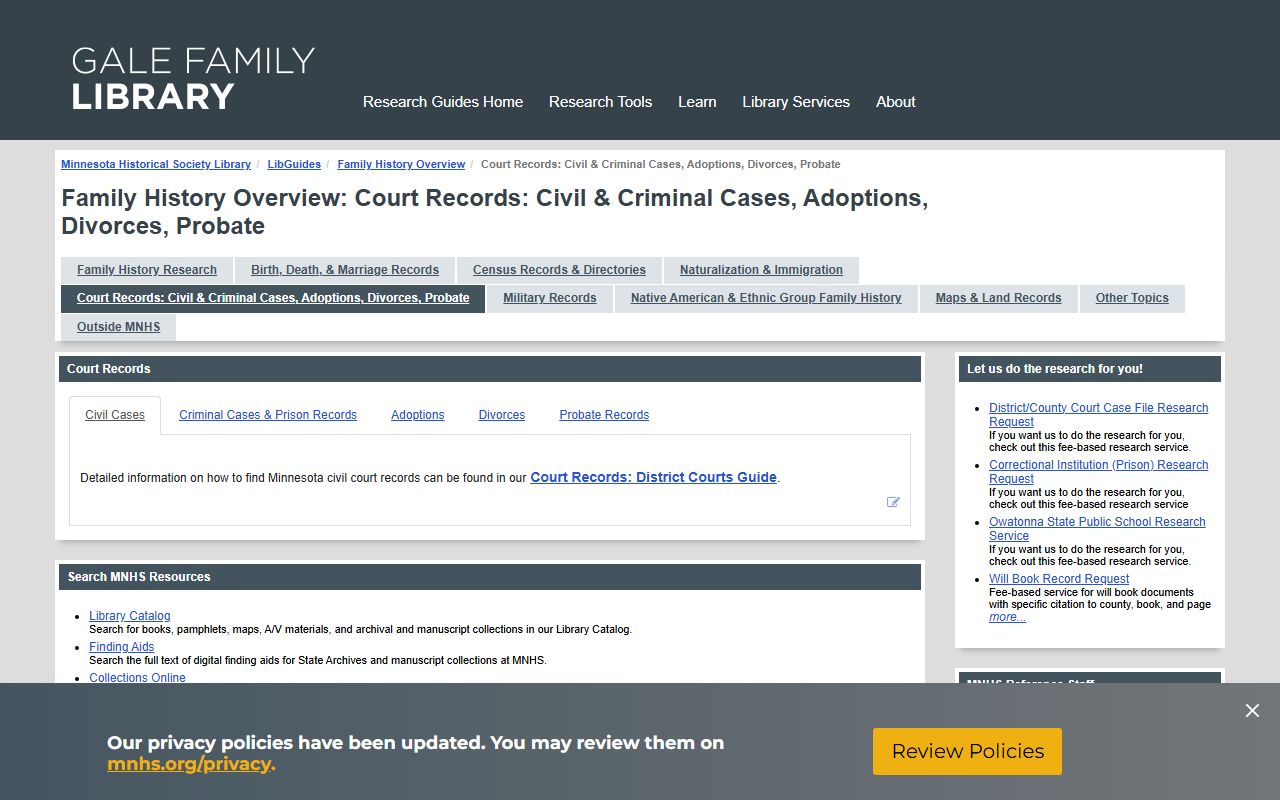
For older divorce records, the Minnesota Historical Society holds district court judgment books for cases before 1982. Some county civil case files from various date ranges are also available through their research center. Call (651) 259-3300 for help finding historical court records.
Most documents in a divorce file are public. Anyone can ask for copies. Financial source documents like tax returns and bank statements are restricted. Info about children may have limited access too.
Copy Fees for Minnesota Records
Getting copies of divorce records from a Minnesota District Court involves some fees. The cost depends on the type of copy you need. Plain copies are cheaper. Certified copies carry the court seal and cost more but are needed for things like name changes or proving marital status.
The Minnesota Department of Health can verify that a divorce took place using their statewide index. They charge about $9 for a verification. But they do not maintain full divorce records. For the actual judgment and decree, you go to the county District Court where the case was filed.
Standard copy fees across most Minnesota courts look like this:
- Uncertified copies: free or a small per-page fee
- Certified copies: $14 per document in most counties
- Exemplified copies: $14 per document
- Search fee: $5 to $10 if you do not have the case number
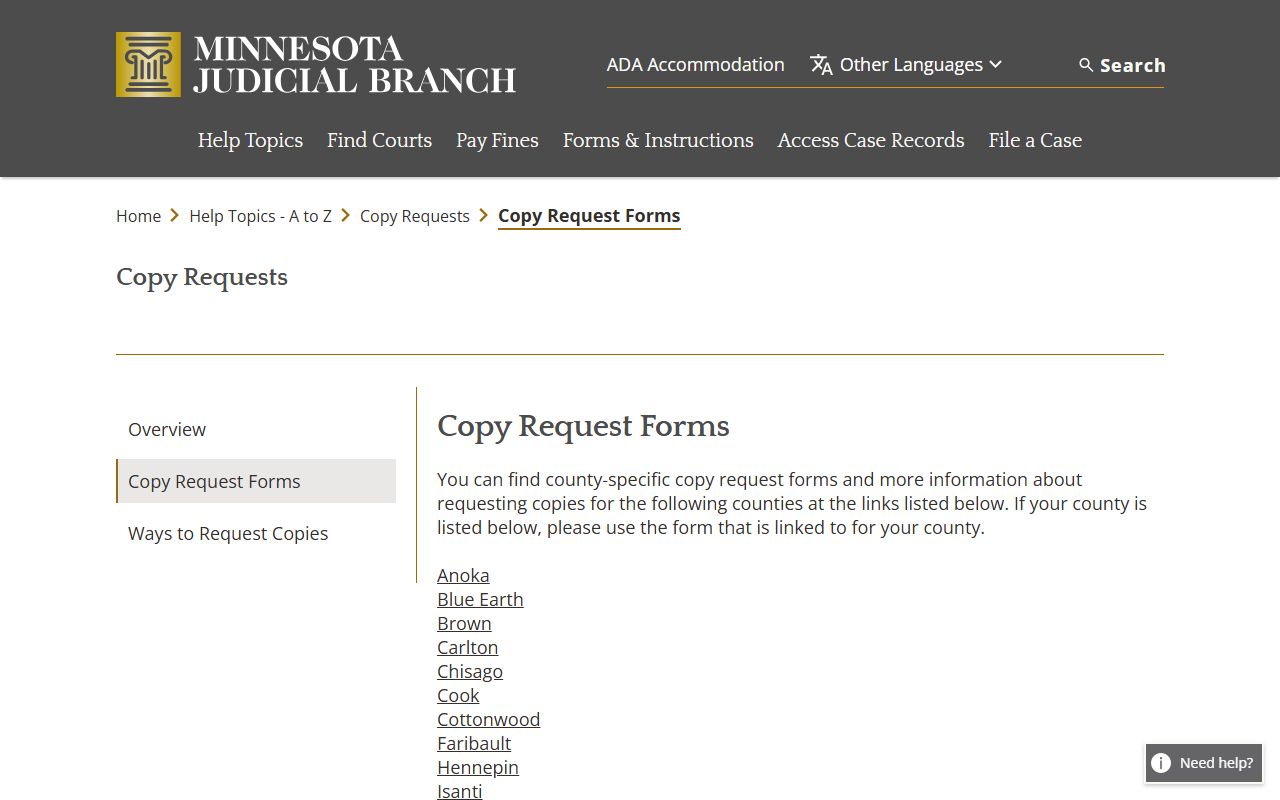
The copy request forms page has downloadable forms for many counties. Some counties have their own specific form. Others use the statewide version. Either way, you can find the right form on this page and submit it by mail or in person.
Fee waivers exist for people who cannot afford court costs. You file an In Forma Pauperis petition with the court. The judge reviews your income and decides if you qualify.
Filing for Divorce in Minnesota
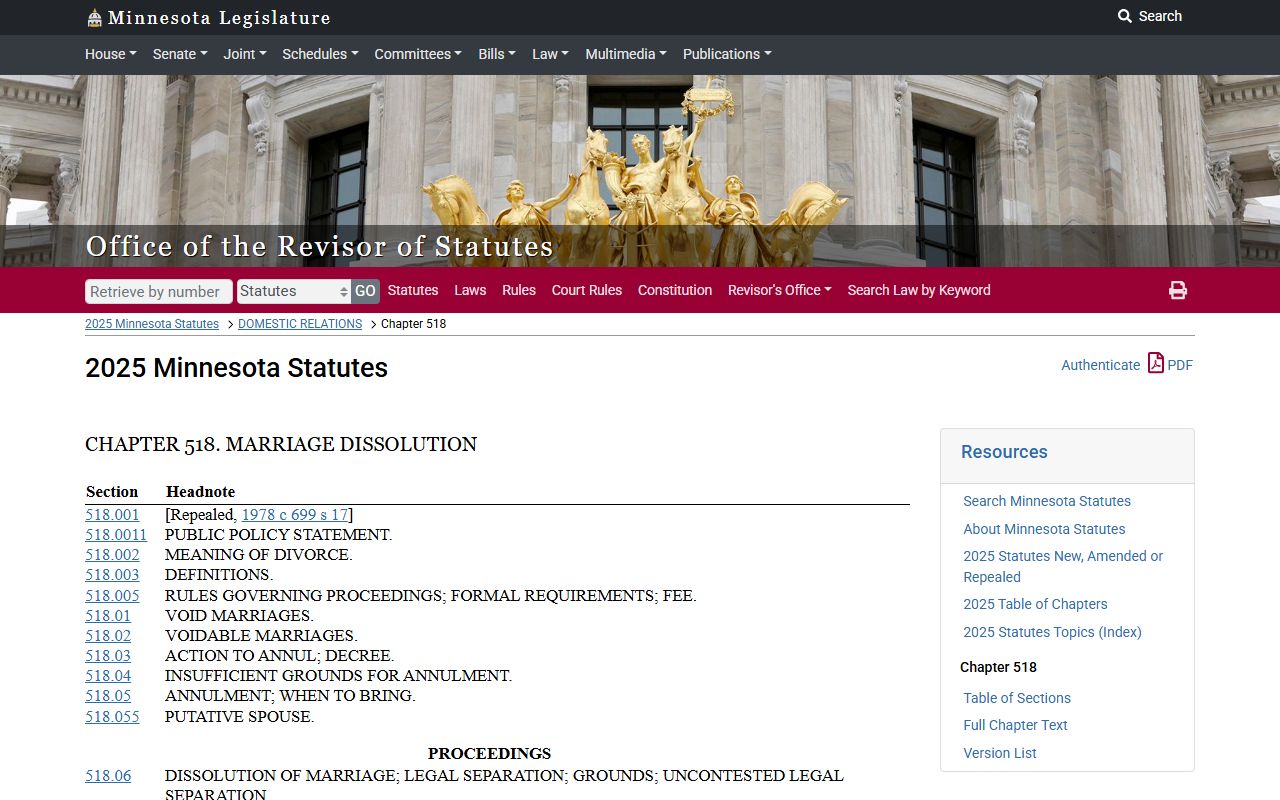
All divorce law in Minnesota falls under Minnesota Statutes Chapter 518. This chapter covers everything from filing the petition to dividing property to setting custody. The law uses the term "dissolution of marriage" instead of "divorce," though both mean the same thing. Every step in the process creates records that go into the court file at the District Court.
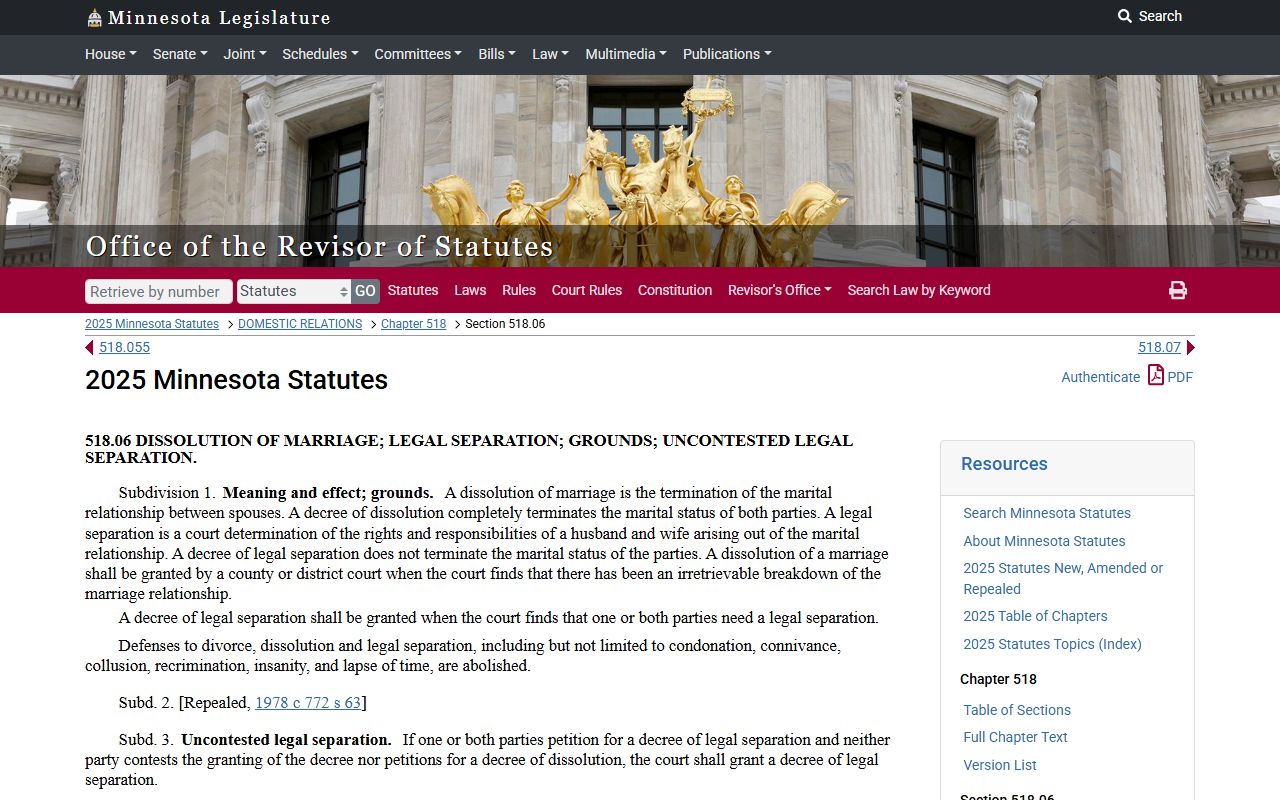
Minnesota is a pure no-fault state. Under Minn. Stat. 518.06, the only ground for divorce is "irretrievable breakdown of the marriage relationship." You do not have to prove that anyone did something wrong. One or both spouses simply state that the marriage cannot be saved, and the court accepts that. Old defenses like adultery or cruelty are not part of Minnesota law.
Filing for divorce costs around $400 for the petitioner. The other spouse pays about $300 to $350 to file a response. Service of process adds $45 to $75 if the sheriff handles it. Private process servers charge their own rates. If both spouses agree, the respondent can sign an Acceptance of Service form and skip the server cost.
Summary Dissolution in Minnesota
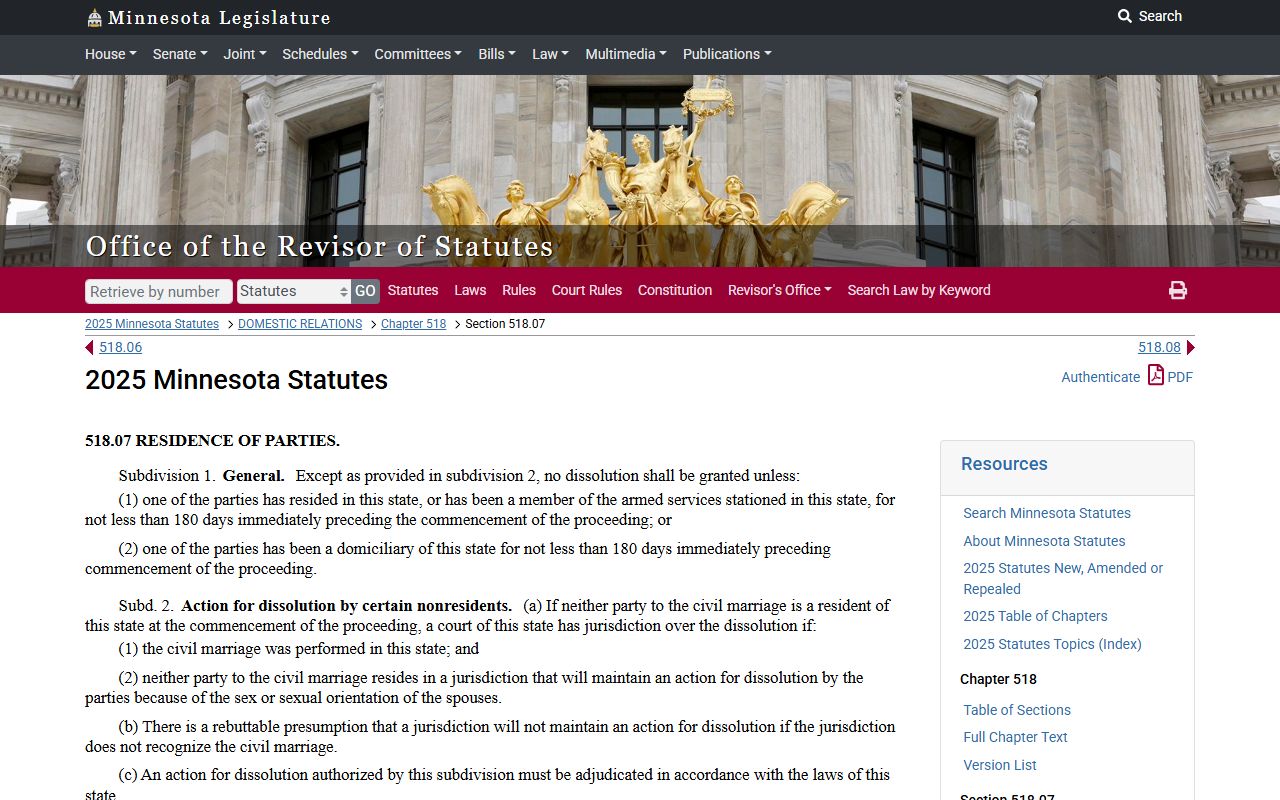
Before you file, at least one spouse must meet the residency rule. Under Minn. Stat. 518.07, one party must have lived in Minnesota for at least 180 days before starting the case. Military members stationed in the state also qualify. You file in the county where you or your spouse lives.
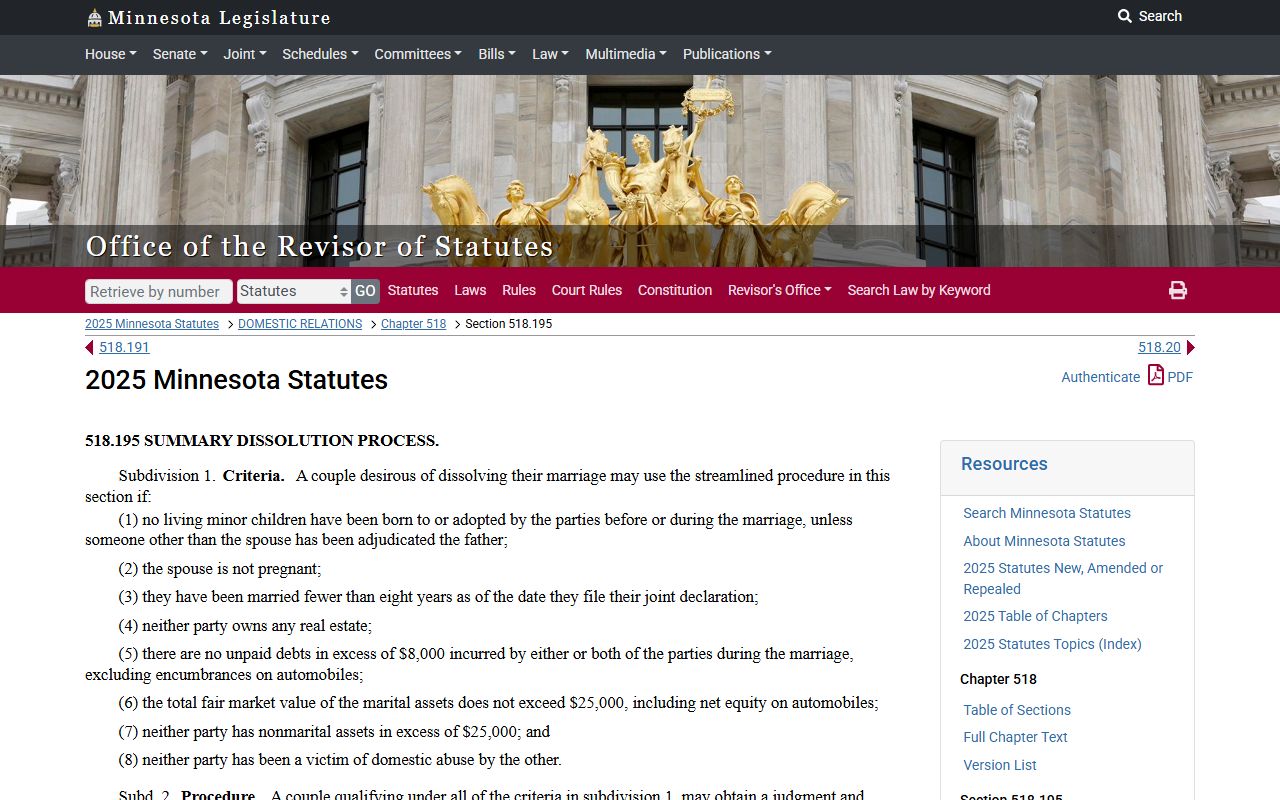
Minnesota offers a faster path for some couples. Minn. Stat. 518.195 allows summary dissolution when certain conditions are met. The couple must have no minor children. The wife cannot be pregnant. The marriage must be under eight years. Neither spouse can own real estate. Total marital assets cannot exceed $25,000. Unpaid debts during the marriage must be under $8,000. If all of these apply, the court can enter a decree 30 days after filing a joint declaration.
Summary cases create fewer records than a contested divorce. The file is smaller. But the judgment and decree still goes into the court system and is available through the same channels as any other dissolution record.
Property and Support in Divorce Records
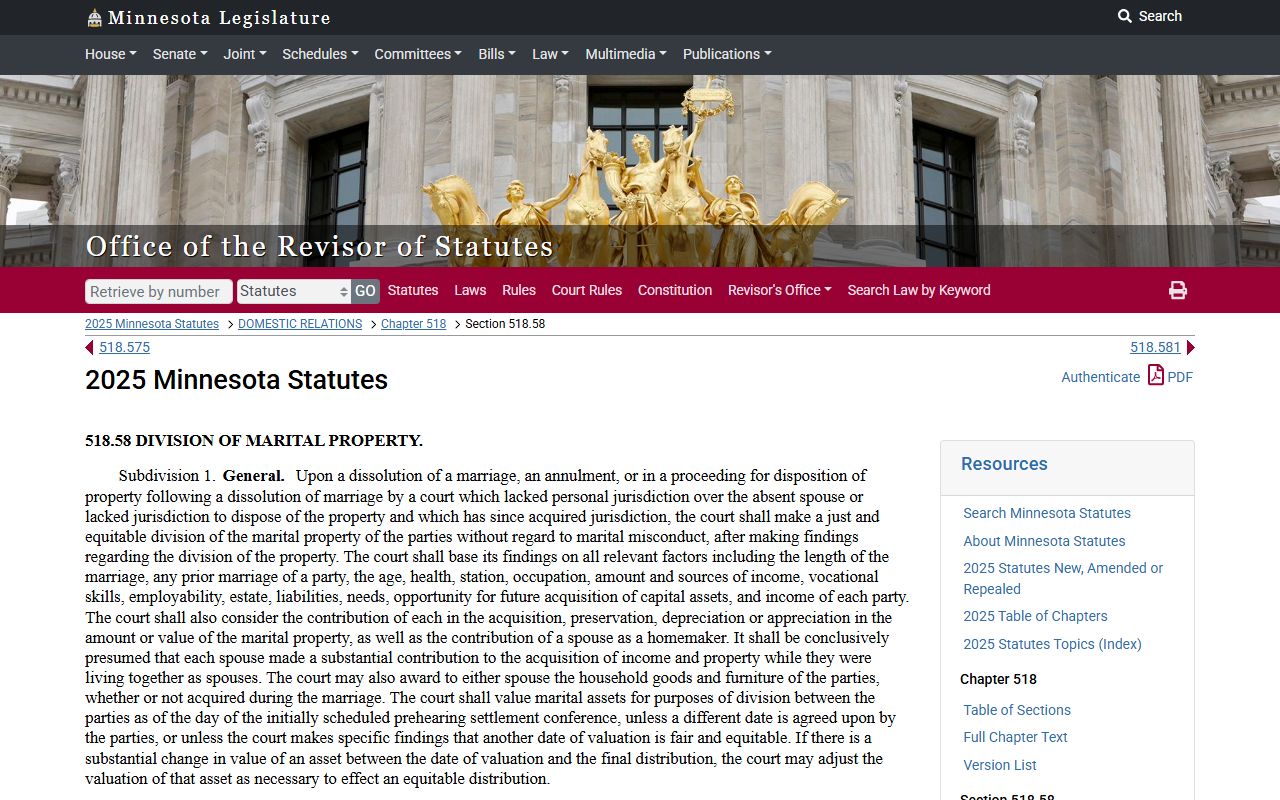
Minnesota follows equitable distribution for property. Under Minn. Stat. 518.58, the court divides marital property fairly but not always equally. The judge looks at how long the marriage lasted, each spouse's income and future earning ability, and what each person contributed. Property owned before the marriage or received as a gift is usually kept separate. Divorce records show how the court split everything, from the house to bank accounts to retirement funds.
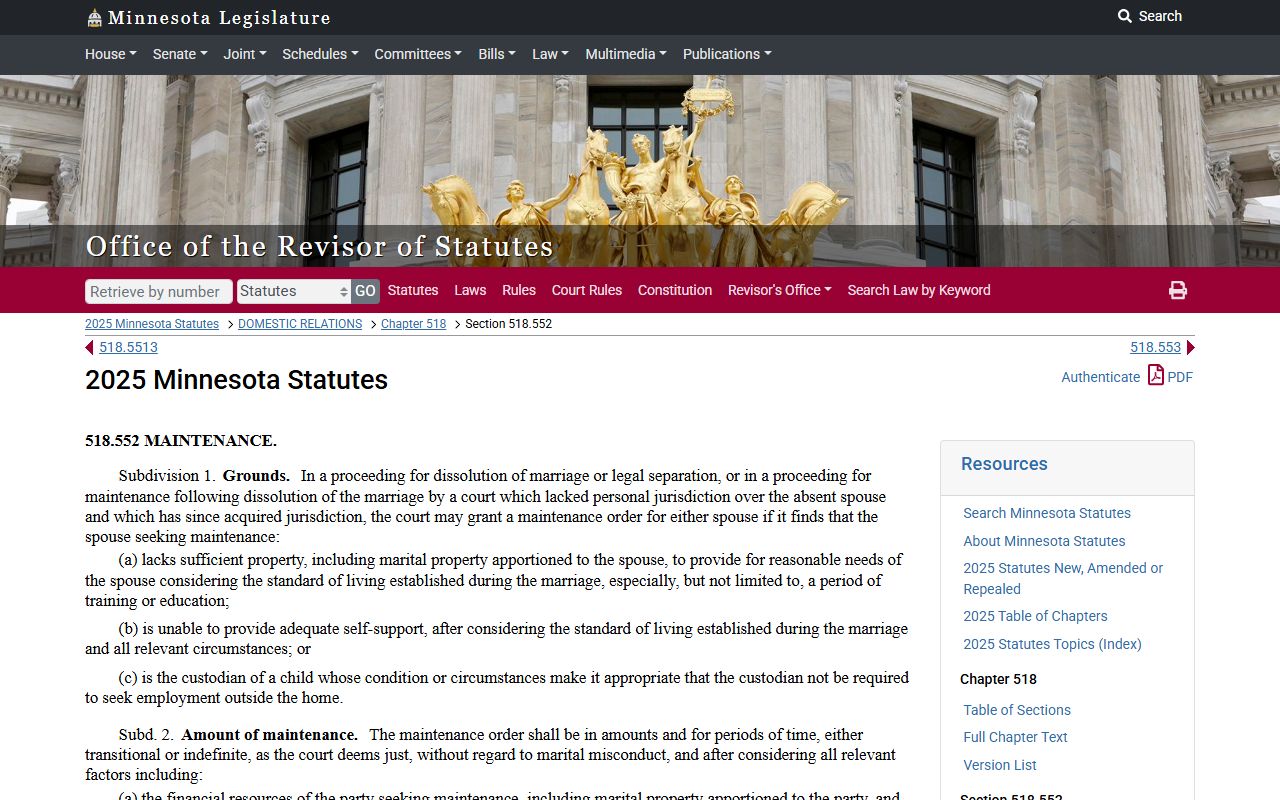
Spousal maintenance is the other big piece. Under Minn. Stat. 518.552, the court can order one spouse to pay the other if that person lacks enough resources for basic needs or cannot be self-supporting through work. The amount depends on the standard of living during the marriage, how long it lasted, and each spouse's financial situation. These terms are all part of the divorce record.
Are Minnesota Divorce Records Public
Yes. Court records in Minnesota are generally public under the Rules of Public Access to Records of the Judicial Branch. You do not have to be a party to the case. You don't need a reason for your request. Walk into any District Court and ask for a divorce file, and they will pull it for you.
Some parts of divorce files have restricted access. Financial source documents like tax returns and pay stubs stay private. Social security numbers and bank account numbers get redacted. Custody evaluations may be sealed. A party can ask the court to seal other parts of the file, but this is not common. The judge weighs privacy concerns against public interest before making that call.
Note: Most Minnesota divorce records are open to the public, but financial source documents and some child-related reports may have limited access.
Minnesota Legal Help Resources
Several groups offer legal help with divorce in Minnesota. Mid-Minnesota Legal Aid covers the Twin Cities metro and parts of central Minnesota. Call (612) 334-5970 for family law services. Southern Minnesota Regional Legal Services handles the southern part of the state at (888) 575-2954.
The Minnesota State Bar Association runs a lawyer referral service at (612) 752-6699. LawHelpMN has self-help guides and forms for people filing on their own. The Minnesota Judicial Branch Self-Help Center has step-by-step instructions and all official court forms for dissolution cases. Many courthouses also have a self-help desk where staff can point you to the right forms.
Browse Minnesota Divorce Records
Each of Minnesota's 87 counties has its own District Court that handles divorce cases. Pick a county below to find local contact info and resources for divorce records in that area.
Divorce Records in Minnesota Cities
Residents of major cities file for divorce at the District Court in their county. Pick a city below to find out where to go for divorce records in that area.